Ice is back, day 9: soak it to me soak it to me soak it to me
With the very large, very flat sandcastle complete, Tom brought out the sprinklers.
Sprinklers are typically used to help grow crops or grass or happy children on a hot day, but in this case they were being used to grow ice: the sand had to be thoroughly soaked before the crew could start building ice on the sand.

Next up is day 11, when a cold front moved through the arena.
Photo of the Now, vol. 222
Sunday morning saw the swimming, biking and running of the Iron Goddess Triathlon at Waterloo Recreation Area. For two very good reasons, I was there as a photographer rather than as a participant:
- I never learned how to swim, I can’t ride a bike, and — trust me — it’s in everyone’s best interest for me not to try to run unless I’m running from some sort of life-threatening situation. If you’re not convinced, consider this (hilariously accurate) search string somebody used to find my website: “handicapped photographer chelsea mi”.
- As the event’s name suggests, the Iron Goddess Triathlon is only for women.
Since I couldn’t take part in the intentional exhaustion, I began work on the modern photographer’s triathlon — shoot/process/blog — while the women worked on the traditional swim/bike/run triathlon.
The day started with a nice refreshing swim in Portage Lake.


One racer was particularly happy to have finished the swim.

The next step was a bike ride.


The race concluded with a run.


Near the end of the course, organizers wrote encouraging and informative messages on the pavement.


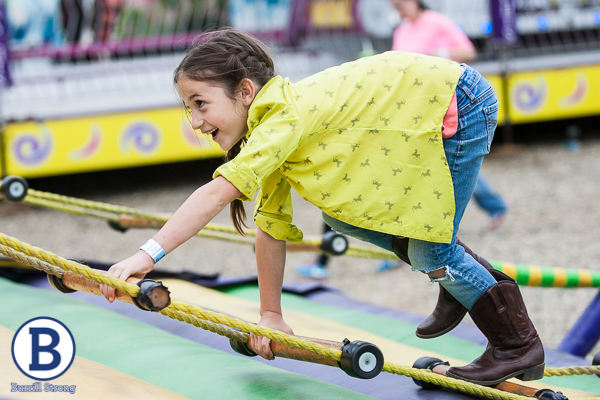
There were plenty of family members to cheer on the racers. Since cute sells newspapers, I kept my eye out for kids cheering on their moms. These girls — two sets of two sisters — had a good time cheering on their moms.

This young man shared a high five with his dad.

This young man even brought a handmade sign with a pithy message: “Yay mom”.

After all that effort, racers were glad to cross the finish line. Some were too weary to exult in the accomplishment, but that wasn’t a problem for this racer, the overall third-place finisher in her race.

Photo of the Now, vol. 221
Each Saturday morning from late spring through summer, farmers descend on Park Street in Chelsea to offer a variety of fresh produce at Chelsea’s farmer’s market. I was dispatched to get a few photos of this week’s market.


The market also features inedible offerings like flowers and even jewelry.


But really, once you see these, it’s hard to think about anything else.

Photo of the Now, vol 220: in memory of Lt. Joel Gentz
Two weeks ago, Air Force 1st Lt. Joel Gentz, a graduate of Chelsea High School, was killed in a helicopter crash in Afghanistan. Yesterday, his funeral procession brought Main Street to a halt as grateful Chelsea residents stopped to pay their respects to a man who died in service to his country.


The rock in Pierce Park received an appropriate paint job.

Businesses around town expressed their gratitude, too.


Ice is back, day 8: a day at the beach
By day 8 the sand was dry enough to host a party, so arena employee Tom invited a few hardworking friends to build a very large, very flat sandcastle.

Building a sandcastle so large and so flat takes plenty of work, including bringing in the new sand…

…raking it out…

…and packing it down with a roller.

While all that hard work was happening, Tom also made sure to check the sand against the laser level to make sure all that work produced a flat surface.


Shortly after I took the above photo, Tom declared the sand base complete and packed up the level, leaving the rink ready for the next phase of the project.

That next phase will be day 9, when all that drying became a distant memory.
Ice is back, day 7: livin’ on the edge
Required reading: day 1; day 3; day 6
On day 7, the rink was thrilling spectators by…drying. Ooooooh. Aaaaaah.

Upon closer inspection, the rink wasn’t exactly as it was on day 6: the crew had added new sand to fill in the gap left where the base had pulled away from the boards. On day 3 the edge looked like this:

But after the work on day 7, the edge looked like this:

The new sand had a much more vibrant red color than the old sand, making it easy to tell the old from the new.


The sand work didn’t begin in earnest until day 8, which is what you’ll see in the next post.
Ice is back, day 6: let’s don’t wait till the water runs dry
Required reading: day 1; day 3
By day 6, the ice had completely melted and the water was well on its way into the atmosphere.

Repair work on the sand had to wait until it dried out, so the problematic cracks in the sand were still spreading the ugly.


Since the sand had to wait, this was a perfect time to work on the cooling pipes hidden in the sand.

I didn’t take exact measurements, but the three pipes shown above span (very) roughly one foot. In other words: there’s a lot of pipe below the ice. The pipes carry antifreeze to keep the ice icy, and I’m sure the ostensible curiosity of using antifreeze to freeze water makes Alanis Morissette happy because it’s a lot like ten thousand spoons when all you need is a knife.
Along with patching those pesky cracks, re-leveling the sand was one of the other maintenance tasks to be undertaken while the ice was on vacation. To make that task more exact, the crew made use of a construction laser level, which they set up while the sand was still drying.

The laser level will see action here in a couple days, but next will be day 7, when the first new sand was added to the rink.
Ice is back, day 3: I’ll stop the compressor and melt with you
Required reading: day 1
When last we left the rink, the ice was looking unusually textured, but it was still white; however, warm temperatures and relentless Zambonis have a way of making ice disappear.


The first picture shows a clear sign of progress: the Zambonis had started to remove the paint layer, thus providing a better look at the sand below the ice. Most of the sand was visible only through a layer of ice, but in a few places around the rink the ice had melted away entirely, providing an unobstructed look at the very soggy sand.


The rest of the rink was still covered in ice, but as shown by the layer of water on the ice, it was melting rapidly.

If you were wondering where all that paint ends up, the answer is simple: it ends up with the rest of the ice shavings the Zambonis collect. Normally the snow ends up in a collection tank in the back of the arena, but because the amount of snow was unusually large and patriotic, it ended up on the grass behind the arena.

A few hours later there wasn’t enough ice left for the Zambonis to shave, so the rink was left alone to melt.


The standing water on the surface provided a reflective surface perfect for cool-looking photos that do little to illustrate the ice replacement process.

It wasn’t all appealing: the cracks, which were ugly at the start, became a different sort of ugly as the ice melted, further accentuating the need for the project.


Since the paint freezes when it’s applied, it melts along with the ice and travels with the ice shavings, leaving behind plenty of evidence along its route.

The prevalence of white ice means the work crew also leaves behind plenty of evidence along its route.

If Horatio Caine were around, he’d likely use his suspension-of-disbelief magic to find a tool mark from a murder weapon and the suspect’s reflection in the tread, thereby sealing the case and providing a fine opportunity to dramatically don his trademark sunglasses and utter yet another one-liner. Fortunately, there was neither a murder to solve nor a painfully melodramatic TV detective to use hilariously improbable (or impossible) methods to solve the murder, so work could continue without unnecessary delay.
At that point, though, there wasn’t much work to continue: after the ice melted, the next step was to let the sand dry out. Watching sand dry is exactly as fascinating as it sounds, so the next set of photos will be from day 6.
Ice is back, day 1: shave and a haircut
It is an unshakable fact of life that whatever can be built must also be maintained and, on occasion, replaced; since the sheets of ice found in ice arenas are manmade, it stands to reason that they, too, must be maintained and even occasionally replaced. For the average ice-aware individual, the maintenance and replacement of ice is shrouded in mystery; most people know about the iconic Zamboni ice resurfacing machines, but few know how a sheet of ice is built in the first place, and few get to see the whole ice replacement process from removal to reconstruction. But by the end of this series, the readers of this blog — and, later, the readers of the Chelsea Standard — no longer will be ignorant of that process: thanks to the crew at Chelsea’s Arctic Coliseum, I have the opportunity to observe and photograph the process from start to finish. Prepare to be illuminated!
Before I begin with the deconstruction photos, I should mention one important fact that may surprise you: as it is at many local rinks, the ice at Arctic is built on a foundation of sand. Though that might concern the Biblical scholars among us, it’s not nearly as tenuous as it sounds; in fact, it’s a common method of construction. You’ll get to see the sand for yourself in future posts, but since this is ice replacement, the whole process starts when there’s still ice in the rink.

You may be wondering: why does the ice need to be replaced? Is it really that bad? Well…since they’re spending time and money to replace the ice, the answer is obvious: yes, it is that bad. The Coliseum’s other rink doesn’t have any serious problems, but this rink had developed large cracks that adversely affected ice quality.


Though the cracks feel smooth on the surface, they’re problematic in at least two ways. First, they allow sand to work its way up into the ice and, eventually, to the surface, resulting in inferior ice for skaters and dulling the Zamboni blades more quickly; second, as visible above, they also pull the paint out of the ice and reveal the sand beneath the ice, making them uglier than a Matt Millen draft board. And just as the only way to fix a Millen draft is to replace Millen, the only way to fix cracks in a sheet of ice is to replace the ice.
Naturally, to replace the ice, you must first remove the ice. The first step is simply to cut the refrigeration and let the room warm up. What happens when the room warms up? The ice begins to melt, most visibly at the edge.

But while ice conveniently and predictably melts when it’s not properly refrigerated, it can take a while for that much ice to melt, and it can take even longer for that much water to evaporate. It doesn’t take long for the edge of the ice — seen at the Zamboni door in the above photo — to look slushy, but the rest of the surface keeps its cool much too well to let it disappear without encouragement. The good news is that it’s not difficult to encourage an ice surface to disappear.


There’s a misconception that Zambonis do little more than spread water on the ice to fill in its imperfections, but the process is far more complicated than that; in addition to spreading new water on the ice, they also shave off a layer of worn ice and clean the ice before adding a coat of new water. Those capabilities work together beautifully for resurfacing ice, but when it comes to removing ice, the machine need only channel its inner Norelco and give the ice a close shave.
(In case you were wondering, Arctic Coliseum uses real Zambonis, and not those inferior knockoffs Olympic organizers so foolishly used at the Vancouver Olympics.)
Most of the ice shavings are collected in the snow tank, but some are a bit less cooperative, electing instead to watch the process from a front-row seat near the Zamboni’s blade.

Despite their best efforts, those shavings still end up off the rink.

The remaining ice provides a good reason to appreciate the second and third steps in a Zamboni’s resurfacing process. Hockey wouldn’t be much fun on ice that had been shaved but not reconditioned:

Though it may not be difficult to remove ice with a Zamboni, it’s certainly time-consuming. That’s why you’ll still see Zambonis running on day 3.
Speaking of which: come back soon for the day 3 post, in which the ice rink begins to look less like an ice rink!
Photo of the Now, vol. 219: Memorial Day
Monday was Memorial Day, which was yet again accompanied by one of my favorite local events: Chelsea’s Memorial Day parade and ceremony. Attendance was excellent, as it has been for the past few years.
First, the parade:


And then the ceremony, held in Oak Grove Cemetery:


Retired Lt. Col. Harry Hawkins addressed the crowd.


Recent Posts
@sgtwolverine on Twitter
- Northwestern vs Vanderbilt: the Fighting Smartypants Bowl. Northwestern gets the Smartypants bragging rights this time. 2 days ago
- Brock Mealer's walk was the single most powerful moment I've seen in Michigan Stadium. To all who played a part in that triumph: you rock. 2 days ago
- Got to meet @OfficialBraylon at tonight's Chelsea football game. The Beard is as good as advertised! 3 days ago
- Both Chelsea freshmen and JV football lost to Monroe. It's up to the varsity to defend the Bulldogs' honor now. 4 days ago
- Read this. NOW. http://j.mp/agPFz9 4 days ago
- More updates...